The effect of postbiotics supplementation on obesity and metabolic health: a systematic review and meta-analysis of randomized control trials | Nutrition & Metabolism

This comprehensive meta-analysis aimed to evaluate the effects of postbiotic supplementation on various metabolic health outcomes, including glycemic control, anthropometric measures, lipid profiles, inflammatory markers, and blood pressure.
The results revealed several significant yet nuanced findings that demand careful interpretation in light of existing literature and mechanistic insights. Notably, postbiotic supplementation resulted in a statistically significant reduction in serum insulin levels, indicating a potential improvement in insulin sensitivity. However, other glycemic parameters such as FBG, HbA1c, and HOMA-IR did not show significant changes. This discrepancy warrants deeper exploration. While serum insulin dropped significantly, the absence of parallel changes in FBG and HbA1c might be attributed to multiple factors. First, HbA1c represents an average of glucose concentrations over 2 to 3 months; thus, the relatively short duration of most included trials (often ≤ 8 weeks) may have been insufficient to manifest changes in HbA1c. Second, insulin sensitivity can improve independently of fasting glucose levels, especially when baseline glycemia is within normal limits. Many included studies enrolled metabolically healthy individuals or those with mild metabolic derangements, which reduces the magnitude of change detectable in FBG and HbA1c. Furthermore, high heterogeneity (I2 >90%) among studies for glycemic outcomes suggests variability in intervention formulations, participant characteristics, and study designs. Importantly, subgroup analyses provided compelling evidence that longer interventions (>8 weeks) and bacterial-based postbiotics yielded greater insulin-lowering effects, pointing toward a duration- and strain-dependent response [23, 24]. From a mechanistic perspective, postbiotics—defined as non-viable microbial cells, cell components, or metabolites—can exert beneficial metabolic effects through several pathways. SCFAs, particularly butyrate and acetate, are known to enhance insulin sensitivity via G-protein-coupled receptors (GPR41 and GPR43), stimulation of GLP-1 secretion, and AMP-activated protein kinase (AMPK) activation in skeletal muscle and hepatic tissues [5, 6]. These mechanisms help reduce systemic inflammation and improve glucose uptake, even without major shifts in blood glucose values.
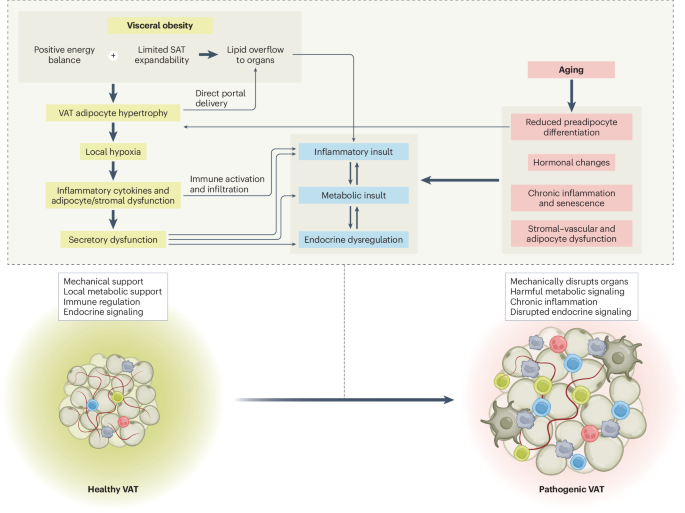
In terms of anthropometric outcomes, the meta-analysis found no significant effect of postbiotic supplementation on body weight or BMI, although there was a non-significant trend toward BMI reduction. However, a statistically significant reduction was observed in WC, which is a more specific indicator of visceral adiposity. These findings are consistent with earlier trials that observed reductions in central obesity without accompanying weight loss. For example, studies by Chambers et al. (2019) and Depommier et al. (2019) demonstrated that microbial metabolites, particularly butyrate and propionate, modulate appetite-regulating hormones such as GLP-1 and PYY and influence hepatic fat oxidation, contributing to selective reduction in abdominal fat [8, 25, 26]. Given that visceral adiposity is more strongly linked with metabolic syndrome and cardiovascular risk than general obesity, the reduction in WC is clinically relevant even in the absence of weight loss. The absence of significant effects on body weight and BMI could be attributed to the inclusion of relatively lean populations, lack of calorie restriction in study protocols, and short intervention durations. Notably, subgroup analyses showed that WC reduction was more pronounced in individuals under 50 years of age and in interventions ≤ 8 weeks, suggesting that younger individuals might respond more readily to metabolic modulation by postbiotics, possibly due to higher baseline metabolic flexibility [27].
With regard to lipid profiles, the findings were mixed. Postbiotic supplementation significantly reduced TG levels, while changes in LDL-C, HDL-C, and TC were not statistically significant. The reduction in TG is biologically plausible and aligns with findings from previous reviews and RCTs, such as the review by Zhang et al. (2021), which demonstrated that SCFA-producing postbiotics can inhibit hepatic lipogenesis and enhance lipid oxidation via AMPK and Peroxisome proliferator-activated receptor alpha (PPAR-α) pathways [28, 29]. SCFAs can also reduce the expression of lipogenic enzymes like SREBP-1c and stimulate adiponectin, leading to decreased very low density lipoprotein (VLDL) secretion and TG synthesis in the liver [11, 30]. Subgroup analyses further revealed that SCFA-based interventions had greater efficacy in TG reduction compared to bacterial lysates. The non-significant effects on LDL-C and HDL-C might stem from several causes. Firstly, cholesterol homeostasis is complex and tightly regulated by hepatic synthesis, intestinal absorption, and bile acid metabolism. Postbiotics may influence this system indirectly, but effects may take longer to materialize or require specific formulations. Secondly, inter-study variation in baseline lipid profiles and dietary intake could dilute measurable effects. Finally, HDL-C modulation is particularly challenging, as even pharmacologic agents struggle to produce meaningful changes in HDL-C levels [31].
A notable finding of this meta-analysis was the significant reduction in CRP levels, highlighting the anti-inflammatory potential of postbiotics. CRP is a sensitive systemic marker of inflammation and an independent predictor of cardiovascular risk. The reduction in CRP supports the hypothesis that postbiotics modulate gut-derived inflammation via improved intestinal barrier function and reduced endotoxemia [32]. Mechanistically, SCFAs and bacterial cell wall components downregulate NF-κB signaling and pro-inflammatory cytokine production [33]. Interestingly, although IL-6 levels did not change significantly in the overall analysis, subgroup results indicated that bacterial-based postbiotics led to a meaningful IL-6 reduction (WMD = − 0.89 pg/mL), suggesting a formulation-specific anti-inflammatory effect. The lack of consistent changes in IL-6 could be due to several reasons: variability in assay sensitivity, baseline inflammatory status, and limited statistical power. IL-6 is often more variable than CRP and may require longer intervention durations to show consistent downregulation. Prior studies, such as those by Zdybel et al. (2025), have also shown that microbial-based anti-inflammatory effects are more evident in individuals with elevated baseline inflammation or metabolic syndrome [9].
Regarding blood pressure, no significant effects were observed on systolic or diastolic blood pressure. This finding is not surprising, as postbiotics are unlikely to exert acute vascular effects unless mediated through significant weight loss, improved insulin sensitivity, or reduced systemic inflammation—changes that require prolonged intervention. Additionally, most included participants were normotensive at baseline, leaving minimal room for improvement. Some experimental studies suggest that SCFAs may modulate blood pressure through ACE inhibition or modulation of sympathetic nervous activity, but human evidence remains inconclusive [34].
Furthermore, although NAFLD is frequently discussed as a potential target, the current evidence is extremely scarce and does not permit a meta-analysis [10, 12].
One study recent reviews and meta-analyses have summarized preclinical (animal) evidence on postbiotics for obesity and metabolic health [35]. However, preclinical findings are not directly translatable to clinical practice due to important differences in species physiology, dosing (often much higher relative doses in animals), routes of administration, tightly controlled diets and environments, outcome definitions (histologic or tissue endpoints vs. clinical biomarkers), and differing risks of bias in preclinical literature. Therefore, we intentionally restricted our inclusion criteria to randomized controlled trials in human participants to provide clinically applicable estimates of efficacy and safety. Our meta-analysis synthesized 25 human RCTs and focuses on outcomes directly relevant to patients and clinicians (glycemic indices, anthropometrics, lipid profile, inflammatory markers, and blood pressure). This distinction explains why effect sizes reported in animal meta-analyses may be larger and not directly comparable with those observed in human trials.
Subgroup and sensitivity analyses provided further granularity. The benefits of postbiotics were more pronounced in interventions exceeding 8 weeks, among younger participants for WC and TG, and in SCFA-based formulations for TG and bacterial-based postbiotics for IL-6 and insulin. These findings underscore the importance of matching postbiotic type, dosage, and treatment duration with specific population subgroups for optimal efficacy. The robustness of our findings was confirmed in sensitivity analyses, including the exclusion of pediatric populations, which yielded results consistent with the primary analysis. The substantial heterogeneity observed across several outcomes in this meta-analysis likely arises from multiple sources. First, differences in baseline characteristics of participants, such as age, metabolic health status, and sex distribution, may have influenced the responsiveness to postbiotic supplementation. Second, variations in the type of intervention (SCFA-based vs. bacterial-based postbiotics), dosage, and delivery format are important contributors, as our subgroup analyses indicated formulation-dependent effects. Third, intervention duration also appeared to play a significant role, with longer interventions generally demonstrating stronger metabolic improvements. Additionally, methodological differences across trials, including sample size, study design (parallel vs. crossover), and blinding quality, may further explain part of the observed variability. These factors collectively suggest that the heterogeneity is partly inherent to the diversity of study populations and interventions, underscoring the need for more standardized and longer-term RCTs to clarify the true magnitude of postbiotic effects.
This meta-analysis has several strengths, including the inclusion of randomized controlled trials, robust subgroup and sensitivity analyses, and assessment of publication bias, which appeared minimal. However, limitations must be acknowledged. The diversity of postbiotic formulations and inconsistent reporting of compositional details limited our ability to compare across studies. Many included trials had small sample sizes and short durations, and dietary or lifestyle confounders were not consistently controlled. Furthermore, few studies assessed gut microbiota composition, which could have provided mechanistic insight into observed outcomes. Furthermore, wide variability in populations, intervention types, and durations provided an ideal context for subgroup analysis based on age, duration, and postbiotic form (SCFA vs. bacterial), as reported in the main analysis. Collectively, the included studies represent a robust and heterogeneous body of evidence that enhances the external validity of the meta-analysis findings. The lack of trials specifically addressing NAFLD outcomes (e.g., liver fat quantification) is a major limitation, and future studies should focus on this area. In some cases, SDs were imputed from p-values or other statistics, which may introduce uncertainty. This review was not pre-registered in PROSPERO due to time constraints, the lengthy approval process, and concerns regarding topic overlap and ethical considerations within the platform. This should be considered as a methodological limitation. Although vinegar/acetate interventions may provide mechanistic insights into SCFA effects, they were not included in our analysis because they fall outside the strict definition of postbiotics used in this review. Future reviews with broader inclusion criteria may consider integrating such studies.
In conclusion, postbiotic supplementation appears to confer modest but clinically relevant improvements in certain metabolic parameters, particularly insulin levels, triglycerides, CRP, and WC. These effects are likely mediated by microbial metabolites such as SCFAs and bacterial components acting through endocrine, inflammatory, and metabolic pathways. Future research should aim for longer intervention periods, standardized postbiotic formulations, and inclusion of microbiome and inflammatory biomarkers to elucidate underlying mechanisms and enhance clinical applicability.
link