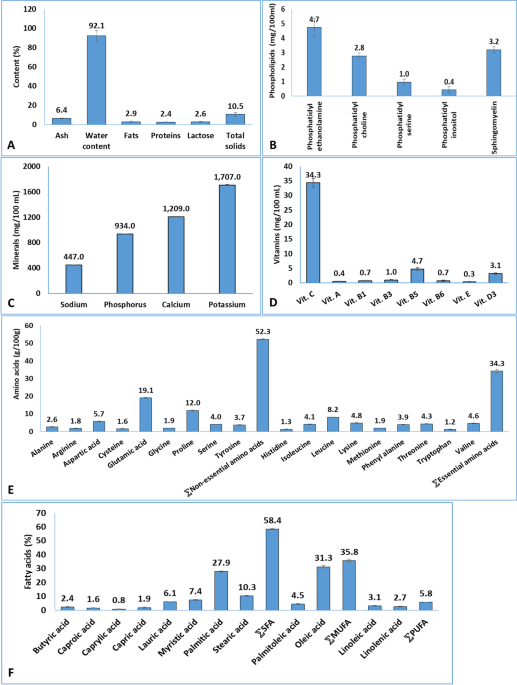
Dose-dependent effects of camel milk on immune function and metabolic health in weaning rats
Smith, J. P., Thompson, J. F. & Ellwood, D. A. Hospital system costs of artificial infant feeding: estimates for the Australian capital territory. Aust N Z. J. Public. Health. 26, 543–551 (2002).
Google Scholar
World Health Organization. Global strategy for infant and young child feeding. World Health Organ. 1–5 (2001).
American Academy of Pediatrics. Breastfeeding and the use of human milk. Pediatrics 115, 496–506 (2005).
Google Scholar
Grummer-Strawn, L. M. & Mei, Z. Does breastfeeding protect against pediatric overweight? Analysis of longitudinal data from the centers for disease control and prevention pediatric nutrition surveillance system. Pediatrics 113, e81–e86 (2004).
Google Scholar
Quinn, P. J. et al. The effect of breastfeeding on child development at 5 years: a cohort study. J. Paediatr. Child. Health. 37, 465–469 (2001).
Google Scholar
Oddy, W. H., De Klerk, N. H., Sly, P. D. & Holt, P. G. The effects of respiratory infections, atopy, and breastfeeding on childhood asthma. Eur. Respir J. 19, 899–905 (2002).
Google Scholar
Bachrach, V. R. G., Schwarz, E. & Bachrach, L. R. Breastfeeding and the risk of hospitalization for respiratory disease in infancy: a meta-analysis. Arch. Pediatr. Adolesc. Med. 157, 237–243 (2003).
Google Scholar
Suliman, O. et al. The effect of weaning practices on the nutritional and health status of Saudi preschool children. Cureus 15, e47273 (2023).
Google Scholar
White, J. M. Weaning: what influences the timing?. Community Pract. 82, 34–37 (2009).
Google Scholar
Tarrant, M. et al. Breastfeeding and weaning practices among Hong Kong mothers: a prospective study. BMC Pregnancy Childbirth. 10, 1–12 (2010).
Google Scholar
Ajmal, S., Ajmal, L., Ajmal, M. & Nawaz, G. Association of malnutrition with weaning practices among infants in Pakistan. Cureus 14, e31018 (2022).
Google Scholar
Amr, M. & Farid, A. Impact of cow, buffalo, goat or camel milk consumption on oxidative stress, inflammation and immune response post weaning time. Sci. Rep. 14, 9967 (2024).
Google Scholar
Mustafa, A. B. et al. Impact of early weaning on constituents and nutritional values of camel milk in modern system. Open. Vet. J. 10, 232–238 (2020).
Google Scholar
Liu, Y. & Zhang, F. Comparison of whole goat milk and its major fractions regarding the modulation of gut microbiota. J. Sci. Food Agric. 102, 3618–3627 (2022).
Google Scholar
Ayoub, M. A. et al. Invited review: camel milk–derived bioactive peptides and diabetes—Molecular view and perspectives. J. Dairy. Sci. 107, 649–668 (2024).
Google Scholar
Liu, Y., Cai, J. & Zhang, F. Functional comparison of breast milk, cow milk and goat milk based on changes in the intestinal flora of mice. LWT – Food Sci. Technol. 150, 111976 (2021).
Google Scholar
Bakry, I. A. et al. How does camel milk fat profile compare with that of human milk fat to serve as a substitute for human milk? Int. Dairy. J. 146, 105738 (2023).
Google Scholar
Al-Awadi, F. M. & Srikumar, T. S. Trace elements and their distribution in protein fractions of camel milk in comparison to other commonly consumed milks. J. Dairy. Res. 68, 463–469 (2001).
Google Scholar
Ismail, L. C. et al. Camel milk consumption patterns and perceptions in the UAE: A cross-sectional study. J. Nutr. Sci. 11, e59 (2022).
Google Scholar
Mirmiran, P., Ejtahed, H. S., Angoorani, P., Eslami, F. & Azizi, F. Camel milk has beneficial effects on diabetes mellitus: A systematic review. Int. J. Endocrinol. Metab. 15, e42176 (2017).
Ayoub, M. A., Palakkott, A. R., Ashraf, A. & Iratni, R. The molecular basis of the anti-diabetic properties of camel milk. Diabetes Res. Clin. Pract. 146, 305–312 (2018).
Google Scholar
Amr, M., Mohie-Eldinn, M. & Farid, A. Evaluation of buffalo, cow, goat and camel milk consumption on multiple health outcomes in male and female Sprague Dawley rats. Int. Dairy. J. 146, 105760 (2023).
Google Scholar
Agoston, D. V. How to translate time? The Temporal aspect of human and rodent biology. Front. Neurol. 8, 92 (2017).
Google Scholar
Almasri, R. S., Bedir, A. S., Ranneh, Y. K., El-Tarabily, K. A. & Al Raish, S. M. Benefits of camel milk over cow and goat milk for infant and adult health in fighting chronic diseases: A review. Nutrients 16, 3848 (2024).
Google Scholar
Riley, L. K., Rupert, J. & Boucher, O. Nutrition in toddlers. Am. Fam Physician. 98, 227–233 (2018).
Google Scholar
Liu, Z., Moate, P. & Rochfort, S. A simplified protocol for fatty acid profiling of milk fat without lipid extraction. Int. Dairy. J. 90, 68–71 (2019).
Google Scholar
Kamal, A. M., Salama, O. A. & El-Saied, K. M. Changes in amino acids profile of camel milk protein during the early lactation. Int. J. Dairy. Sci. 2, 226–234 (2007).
Google Scholar
Antakli, S., Sarkees, N. & Sarraf, T. Determination of water-soluble vitamins B1, B2, B3, B6, B9, B12 and C on C18 column with particle size 3 µM in some manufactured food products by HPLC with UV-DAD/FLD detection. Int. J. Pharm. Pharm. Sci. 7, 219–224 (2015).
Google Scholar
Guneser, O. & Yuceer, Y. K. Effect of ultraviolet light on water- and fat-soluble vitamins in cow and goat milk. J. Dairy. Sci. 95, 6230–6241 (2012).
Google Scholar
Wei, W. et al. Phospholipid composition and fat globule structure I: comparison of human milk fat from different gestational ages, lactation stages, and infant formulas. J. Agric. Food Chem. 67, 13922–13928 (2019).
Google Scholar
World Health Organization Multicentre Growth Reference Study Group. WHO Child Growth Standards: Length/height-for-age, weight-for-age, weight-for-length, weight-for-height: Methods and Development (World Health Organization, 2006).
World Health Organization. Guideline: Updates on the Management of Severe Acute Malnutrition in Infants and Children (World Health Organization, 2013).
Van Loveren, H., Verlaan, A. P. J. & Vos, J. G. An enzyme-linked immunosorbent assay of anti-sheep red blood cell antibodies of the classes M, G, and A in the rat. Int. J. Immunopharmacol. 13, 689–695 (1991).
Google Scholar
Bourguignon, C., Dupuy, A. M., Coste, T., Michel, F. & Cristol, J. P. Evaluation of NM-BAPTA method for plasma total calcium measurement on Cobas 8000®. Clin. Biochem. 47, 636–639 (2014).
Google Scholar
Costa, M. B., Lanna, C. M. M. & Braga, M. H. Assessment of asymptomatic hypercalcemia in outpatients. J. Bras. Patol. Med. Lab. 44, 329–335 (2008).
Google Scholar
Arain, M. A. et al. Nutritional significance and promising therapeutic/medicinal application of camel milk as a functional food in human and animals: a comprehensive review. Animal Biotechnol. 34 (6), 1988–2005 (2023).
Google Scholar
Arain, M. A. et al. Exploring the anti-diabetic properties of camel milk: effects on blood glucose, antioxidant defense, and organ histo-morphological features in rabbits. J. Mol. Histol. 56 (2), 92 (2025).
Google Scholar
Muthukumaran, M. S., Mudgil, P., Baba, W. N., Ayoub, M. A. & Maqsood, S. A comprehensive review on health benefits, nutritional composition and processed products of camel milk. Food Rev. Int. 39, 3080–3106 (2023).
Google Scholar
Mohammaddin, A. et al. Effects of camel milk in dyslipidaemia: A randomized clinical trial. Int. Dairy. J. 84, 79–84 (2018).
Google Scholar
Arain, M. A., Khaskheli, G. B., Barham, G. S. & Marghazani, I. B. Lactoferrin’s role in modulating NF-κB pathway to alleviate diabetes-associated inflammation: A novel in-silico study. Heliyon 10 (14), e34051 (2024).
Google Scholar
Ho, T. M., Zou, Z. & Bansal, N. Camel milk: A review of its nutritional value, heat stability, and potential food products. Food Res. Int. 153, 110870 (2022).
Google Scholar
Seifu, E. Recent advances on camel milk: nutritional and health benefits and processing implications—A review. AIMS Agric. Food. 7, 777–804 (2022).
Google Scholar
Li, R. R. et al. Protein profile of whole camel milk resulting from commercial thermal treatment. LWT – Food Sci. Technol. 134, 110256 (2020).
Google Scholar
Nayik, G. A. et al. Nutritional profile, processing and potential products: A comparative review of goat milk. Dairy 3, 622–647 (2022).
Google Scholar
Medhammar, E. et al. Composition of milk from minor dairy animals and Buffalo breeds: a biodiversity perspective. J. Sci. Food Agric. 92, 445–474 (2012).
Google Scholar
Zhao, L., Zhang, J., Ge, W. & Wang, J. Comparative lipidomics analysis of human and ruminant milk reveals variation in composition and structural characteristics. J. Agric. Food Chem. 70, 8994–9006 (2022).
Google Scholar
Seyiti, S., Kelimu, A. & Yusufu, G. Bactrian camel milk: chemical Composition, Bioactivities, processing Techniques, and economic potential in China. Molecules 29, 4680 (2024).
Google Scholar
Zou, X. et al. Lipid composition analysis of milk fats from different mammalian species: potential for use as human milk fat substitutes. J. Agric. Food Chem. 61, 7070–7080 (2013).
Google Scholar
Gao, D., Mu, Q., Liu, L. & Guo, J. Determination and comparison on protein and amino acids profile of four kinds of livestock milk in inner Mongolian. Food Sci. 42, 267–272 (2017).
Bakry, I. A. et al. Comparative characterisation of fat fractions extracted from Egyptian and Chinese camel milk. Int. Dairy. J. 105, 104691 (2020).
Google Scholar
Teng, F., Wang, P., Yang, L., Ma, Y. & Day, L. Quantification of fatty acids in human, cow, buffalo, goat, yak, and camel milk using an improved one-step GC-FID method. Food Anal. Methods. 10, 2881–2889 (2019).
Google Scholar
United States Department of Agriculture. Dietary Guidelines for Americans 2020–2025 (USDA Center for Nutrition Policy and Promotion, 2020).
Williams, K. M. Update on bone health in pediatric chronic disease. Endocrinol. Metab. Clin. North. Am. 45, 433–441 (2016).
Google Scholar
Jiao, L. et al. Estrogen and calcium handling proteins: new discoveries and mechanisms in cardiovascular diseases. Am. J. Physiol. -Heart Circ. Physiol. 318, H820–H829 (2020).
Google Scholar
Soldin, O. P., Hoffman, E. G., Waring, M. A. & Soldin, S. J. Pediatric reference intervals for FSH, LH, estradiol, T3, free T3, cortisol, and growth hormone on the DPC IMMULITE 1000. Clin. Chim. Acta. 355, 205–210 (2005).
Google Scholar
Djakpo, D. K., Wang, Z. Q. & Shrestha, M. The significance of transaminase ratio (AST/ALT) in acute myocardial infarction. Arch. Med. Sci. Atheroscler Dis. 5, 279–283 (2020).
Google Scholar
Kashani, K., Rosner, M. H. & Ostermann, M. Creatinine: from physiology to clinical application. Eur. J. Intern. Med. 72, 9–14 (2020).
Google Scholar
Haines, R. W. et al. Elevated urea-to-creatinine ratio provides a biochemical signature of muscle catabolism and persistent critical illness after major trauma. Intensive Care Med. 45, 1718–1731 (2019).
Google Scholar
Griffin, J. W. & Bradshaw, P. C. Effects of a high-protein diet and liver disease in an in Silico model of human ammonia metabolism. Theor. Biol. Med. Model. 16, 1–14 (2019).
Google Scholar
Parhofer, K. G. & Laufs, U. Lipid profile and lipoprotein (a) testing. Dtsch. Ärztebl Int. 120, 582 (2023).
Google Scholar
Holven, K. B. & van Lennep, J. R. Sex differences in lipids: a life course approach. Atherosclerosis 384, 117270 (2023).
Google Scholar
Moghbeli, M. et al. Cytokines and the immune response in obesity-related disorders. Adv. Clin. Chem. 101, 135–168 (2021).
Google Scholar
Bouman, A., Heineman, M. J. & Faas, M. M. Sex hormones and the immune response in humans. Hum. Reprod. Update. 11, 411–423 (2005).
Google Scholar
Cunningham, M. & Gilkeson, G. Estrogen receptors in immunity and autoimmunity. Clin. Rev. Allergy Immunol. 40, 66–73 (2011).
Google Scholar
Kovats, S. Estrogen receptors regulate innate immune cells and signaling pathways. Cell. Immunol. 294, 63–69 (2015).
Google Scholar
Hewagama, A., Patel, D., Yarlagadda, S., Strickland, F. M. & Richardson, B. C. Stronger inflammatory/cytotoxic T-cell response in women identified by microarray analysis. Genes Immun. 10 (5), 509–516 (2009).
Google Scholar
Grimaldi, C. M., Cleary, J., Dagtas, A. S., Moussai, D. & Diamond, B. Estrogen alters thresholds for B cell apoptosis and activation. J. Clin. Invest. 109, 1625–1633 (2002).
Google Scholar
Pauklin, S., Sernández, I. V., Bachmann, G., Ramiro, A. R. & Petersen-Mahrt, S. K. Estrogen directly activates AID transcription and function. J. Exp. Med. 206, 99–111 (2009).
Google Scholar
Fink, A. L., Engle, K., Ursin, R. L., Tang, W. Y. & Klein, S. L. Biological sex affects vaccine efficacy and protection against influenza in mice. Proc. Natl. Acad. Sci. U.S.A. 115, 12477–12482 (2015).
Google Scholar
García-Durán, M. et al. López-Farré, A. Estrogen stimulates neuronal nitric oxide synthase protein expression in human neutrophils. Circ. Res. 85, 1020–1026 (1999).
Google Scholar
Marriott, I., Bost, K. L. & Huet-Hudson, Y. M. Sexual dimorphism in expression of receptors for bacterial lipopolysaccharides in murine macrophages: a possible mechanism for gender-based differences in endotoxic shock susceptibility. J. Reprod. Immunol. 71, 12–27 (2006).
Google Scholar
Giefing-Kröll, C., Berger, P., Lepperdinger, G. & Grubeck-Loebenstein, B. How sex and age affect immune responses, susceptibility to infections, and response to vaccination. Aging Cell. 14, 309–321 (2015).
Google Scholar
Klein, S. L. & Flanagan, K. L. Sex differences in immune responses. Nat. Rev. Immunol. 16, 626–638 (2016).
Google Scholar
Libert, C., Dejager, L. & Pinheiro, I. The X chromosome in immune functions: when a chromosome makes the difference. Nat. Rev. Immunol. 10, 594–604 (2010).
Google Scholar
Whitacre, C. C. Sex differences in autoimmune disease. Nat. Immunol. 2, 777–780 (2001).
Google Scholar
Martínez, Y. et al. The role of methionine on metabolism, oxidative stress, and diseases. Amino Acids. 49, 2091–2098 (2017).
Google Scholar
Carr, A. C. & Maggini, S. Vitamin C and immune function. Nutrients 9, 1211 (2017).
Google Scholar
Radzikowska, U. et al. The influence of dietary fatty acids on immune responses. Nutrients 11, 2990 (2019).
Google Scholar
Küllenberg, D., Taylor, L. A., Schneider, M. & Massing, U. Health effects of dietary phospholipids. Lipids Health Dis. 11, 1–16 (2012).
Google Scholar
O’Donnell, V. B., Rossjohn, J. & Wakelam, M. J. Phospholipid signaling in innate immune cells. J. Clin. Invest. 128, 2670–2679 (2019).
Google Scholar
Kandeel, M., Morsy, M. A., Khodair, A., Alhojaily, S. & K. M. & Meta-analysis of the efficacy of camel milk consumption for improving autism symptoms in children in randomized clinical trials. Open. Vet. J. 14, 2441–2452 (2024).
Google Scholar
Mebius, R. E. & Kraal, G. Structure and function of the spleen. Nat. Rev. Immunol. 5, 606–616 (2005).
Google Scholar
Bronte, V. & Pittet, M. J. The spleen in local and systemic regulation of immunity. Immunity 39, 806–818 (2013).
Google Scholar
Rouse, B. T. & Sehrawat, S. Immunity and immunopathology to viruses: what decides the outcome? Nat. Rev. Immunol. 10, 514–526 (2010).
Google Scholar
link