APAC Respiratory Therapeutic Devices Market Size, 2033

Asia Pacific Respiratory Therapeutic Devices Market Size
The size of the Asia Pacific respiratory therapeutic devices market was worth USD 2.11 billion in 2024. The Asia Pacific market is anticipated to grow at a CAGR of 5.45% from 2025 to 2033 and be worth USD 19.52 billion by 2033 from USD 12.77 billion in 2025.

The Asia Pacific respiratory therapeutic devices market is driven by a broad range of medical equipment designed to diagnose, monitor and treat respiratory conditions such as chronic obstructive pulmonary disease (COPD), asthma, sleep apnea and cystic fibrosis. These devices include nebulizers, ventilators, continuous positive airway pressure (CPAP) machines, oxygen concentrators, inhalers and peak flow meters. As respiratory diseases continue to rise across the region due to environmental factors, aging populations and lifestyle changes, demand for these therapeutic tools has surged. Air pollution contributes to nearly 7 million premature deaths annually globally with the Asia Pacific region accounting for a significant portion of this burden. In countries like India and China rapid urbanization and industrial emissions have led to deteriorating air quality,y thereby directly increasing the prevalence of respiratory ailments. Respiratory diseases rank among the top five causes of hospitalization in India, emphasizing the critical need for effective therapeutic interventions. Furthermore, Japan’s rapidly aging population has intensified the prevalence of age-related lung disorders such as pneumonia and bronchitis, thereby prompting increased adoption of home-based respiratory support systems. In Australia, rising investments in sleep disorder diagnostics have boosted CPAP usage while government initiatives in Southeast Asian nations are improving access to affordable oxygen therapy solutions. The Asia Pacific region is emerging as a key growth area for respiratory therapeutic device manufacturers seeking long-term expansion opportunities with growing awareness along with expanding healthcare infrastructure and increasing investment in digital health integration.
MARKET DRIVERS
Rising Prevalence of Chronic Respiratory Diseases
Increasing chronic respiratory diseases such as COPD, asthma and interstitial lung disease are among the most significant drivers fueling the growth of the Asia Pacific respiratory therapeutic devices market. Respiratory illnesses accounted for over 10% of total deaths in the Asia Pacific in 2023 with COPD and lower respiratory infections being the leading contributors. In China alone, the Chinese Center for Disease Control and Prevention reported that more than 100 million individuals suffer from COPD thereby making it one of the most prevalent non-communicable diseases in the country. This growing disease burden has resulted in higher patient reliance on therapeutic devices such as nebulizers, oxygen concentrators and CPAP machines to manage symptoms and improve quality of life. Asthma rates have risen significantly over the past decade, especially in urban areas impacted by high levels of air pollution from vehicles and industrial activities. To meet this demand, hospitals and homecare providers have significantly expanded their inventory of portable and advanced respiratory support systems. Moreover, governments across the region are recognizing the economic and social impact of prolonged respiratory illness and have begun integrating device-assisted therapies into national treatment protocols.
Increasing Adoption of Home-Based Respiratory Care
Another major factor fueling the growth of the Asia Pacific respiratory therapeutic devices market is the shift toward home-based respiratory care and is driven by rising healthcare costs and a preference for outpatient treatment models. Hospitals and clinics are increasingly recommending self-administered therapies using CPAP machines, oxygen concentrators and handheld nebulizers to reduce inpatient admissions and alleviate the burden on healthcare facilities. Increase in the number of patients receiving long-term oxygen therapy (LTOT) at home from 20% a decade ago to over 40% currently. In Australia, personal peak flow meters and smart inhaler technology are used to empower patients with real-time monitoring capabilities. In Australia home-based ventilation therapy utilization grew by 25% between 2020 and 2023 among sleep apnea patients opting for CPAP machines instead of frequent clinic visits.In emerging economies like Thailand and Malaysia private insurers and government-backed programs are increasingly covering home-use respiratory devices thereby encouraging broader adoption.
MARKET RESTRAINTS
High Cost of Advanced Respiratory Devices in Low-Income Populations
The high cost associated with advanced respiratory therapeutic products such as CPAP machines, BiPAP systems and portable oxygen concentrators remains a major restraint to their widespread adoption in the Asia Pacific region. While these devices offer significant clinical benefits but they remain financially out of reach for millions in low-income countries such as Indonesia, the Philippines and rural India. In Southeast Asia, less than 10% of respiratory patients can afford long-term device therapy without financial assistance thereby limiting market penetration despite growing disease prevalence. Additionally, maintenance and replacement costs such as filters, masks and batteries further add to the economic burden, thereby discouraging sustained use. In Bangladesh, over 60.97% of patients prescribed CPAP therapy discontinue its use within six months due to affordability issues. Public funding mechanisms and subsidy programs remain underdeveloped in many APAC nations thereby restricting access to essential respiratory treatments.
Limited Reimbursement Policies and Insurance Coverage
Limited reimbursement policies and insufficient insurance coverage for respiratory care products pose a significant challenge to the growth of the Asia Pacific respiratory therapeutic devices market. In United States and Europe where government and private insurers typically cover a substantial portion of device costs but many Asia Pacific countries lack structured reimbursement frameworks for home-based respiratory therapies. In India, despite the expansion of Ayushman Bharat coverage for CPAP machines and oxygen concentrators remains minimal with most benefits restricted to hospital-acquired treatments rather than outpatient device purchases. In Vietnam, the Ministry of Health has not included a wide range of respiratory devices in its national health insurance scheme thereby resulting in low adoption rates outside major urban centers. Less than 30.97% of ASEAN countries provide partial or full reimbursement for long-term respiratory assistive devices thereby creating significant barriers to regular patient use.
MARKET OPPORTUNITIES
Expansion of Telehealth and Remote Patient Monitoring for Respiratory Conditions
An emerging opportunity driving the Asia Pacific respiratory therapeutic devices market is the rapid expansion of telehealth and remote patient monitoring solutions particularly in the management of chronic respiratory diseases. Healthcare providers are increasingly leveraging connected devices to track patient symptoms, adherence and therapy outcomes beyond traditional clinical settings with advancements in digital health technologies. In South Korea, the Ministry of Health and Welfare launched a national initiative promoting “smart homecare” through IoT-enabled inhalers and spirometry devices that transmit real-time data to physicians. Remote monitoring of COPD and asthma patients increased by 35.07% between 2021 and 2023 thereby reducing emergency room visits and hospitalizations. In Singapore, Khoo Teck Puat Hospital integrated AI-powered pulse oximeters and wearable respiratory sensors into its chronic disease management program thereby allowing early detection of exacerbations and timely intervention. India has also seen growing adoption of mobile-based respiratory tracking apps especially in tier-2 and tier-3 cities where access to specialists is limited. Companies like ResApp Health and Apollo Telehealth are partnering with device manufacturers to embed diagnostics into smartphone-compatible accessories.
Growing Demand for Portable and Compact Respiratory Devices
The increasing demand for portable and compact respiratory therapeutic devices presents a significant opportunity for market players in the Asia Pacific region. As patient preferences shift toward mobility and convenience, these manufacturers are focusing on developing lightweight, battery-operated and easy-to-carry versions of CPAP machines, oxygen concentrators and nebulizers that cater to both home and travel needs. Demand for portable oxygen concentrators in the Asia Pacific grew by over 15.17% annually between 2021 and 2023 and is driven by an aging population and rising cases of chronic respiratory conditions requiring ambulatory support. In Japan, companies like Panasonic and Omron expanded their product lines to include ultra-lightweight devices suitable for train and air travel. In Australia, the rise in adventure tourism and long-distance travel has prompted travelers with asthma and COPD to seek portable nebulizers and spirometers for use during flights and outdoor excursions. The Lung Foundation Australia reported that nearly 30.72% of respondents with chronic respiratory conditions preferred portable devices for ease of use during travel which influences purchasing behavior.
MARKET CHALLENGES
Regulatory Complexity and Diverse Approval Pathways Across APAC Countries
Regulatory complexity and fragmented approval processes across different countries is one of the primary challenges facing the Asia Pacific respiratory therapeutic devices market. The streamlined systems in the European Union or the United States contrasts with the APAC region comprises multiple regulatory authorities each with distinct requirements for device classification, registration and clinical validation. In China, the National Medical Products Administration mandates extensive local trials even for devices approved abroad thereby causing delays that can extend beyond 12 months. The average time required to bring a mid-tier respiratory device to market in Southeast Asia is nearly 18 months compared to 8 months in Australia. These inconsistencies make it difficult for global manufacturers to standardize their product offerings and distribution strategies. Smaller firms face resource constraints when attempting to comply with multiple sets of regulations thereby limiting their ability to scale operations efficiently. Unless there is greater harmonization of standards across the region similar to the ASEAN Common Submission Dossier Template (CSDT) these market participants will continue to encounter structural bottlenecks that hinder faster commercialization and widespread adoption of innovative respiratory devices.
Lack of Skilled Healthcare Professionals for Proper Device Usage and Maintenance
Another significant challenge affecting the Asia Pacific respiratory therapeutic devices market is the shortage of trained healthcare professionals capable of guiding patients in the correct usage and maintenance of complex respiratory equipment. End-user education remains inadequate particularly in rural and semi-urban areas while device manufacturers introduce increasingly sophisticated technology such as smart inhalers and connected CPAP machines. In Indonesia, less than 20.96% of family doctors had formal training in respiratory device application thereby leading to improper usage and reduced therapeutic effectiveness. Similarly, in India over 40.76% of asthma patients misused their inhalers due to lack of proper instruction. This knowledge gap extends to nursing staff and caregivers who play a crucial role in ensuring consistent therapy delivery especially in homecare settings. In the Philippines, the Professional Regulation Commission acknowledged a deficiency in continuing education programs focused on respiratory assistive devices thereby prompting calls for revised certification curricula. However, improper device handling will continue to limit the market’s full potential until widespread educational efforts are institutionalized.
REPORT COVERAGE
|
REPORT METRIC |
DETAILS |
|
Market Size Available |
2024 to 2033 |
|
Base Year |
2024 |
|
Forecast Period |
2025 to 2033 |
|
Segments Covered |
By Product, Application, and Region. |
|
Various Analyses Covered |
Global, Regional and Country-Level Analysis, Segment-Level Analysis, Drivers, Restraints, Opportunities, Challenges; PESTLE Analysis; Porter’s Five Forces Analysis, Competitive Landscape, Analyst Overview of Investment Opportunities |
|
Countries Covered |
India, China, Japan, South Korea, Australia, New Zealand, Thailand, Malaysia, Vietnam, Philippines, Indonesia, Singapore, Rest of APAC |
|
Market Leaders Profiled |
Hill-Rom Services Inc. (Baxter), ResMed Inc., Drägerwerk AG & Co. KGaA, Hamilton Medical, Koninklijke Philips N.V., VYAIRE MEDICAL, INC., Invacare Corporation, Shenzhen Mindray Bio-Medical Electronics Co., Ltd., Breas Medical AB, ICU Medical, Medtronic, Fisher & Paykel Healthcare Limited, and GE Healthcare.. |
SEGMENTAL ANALYSIS
By Product Insights
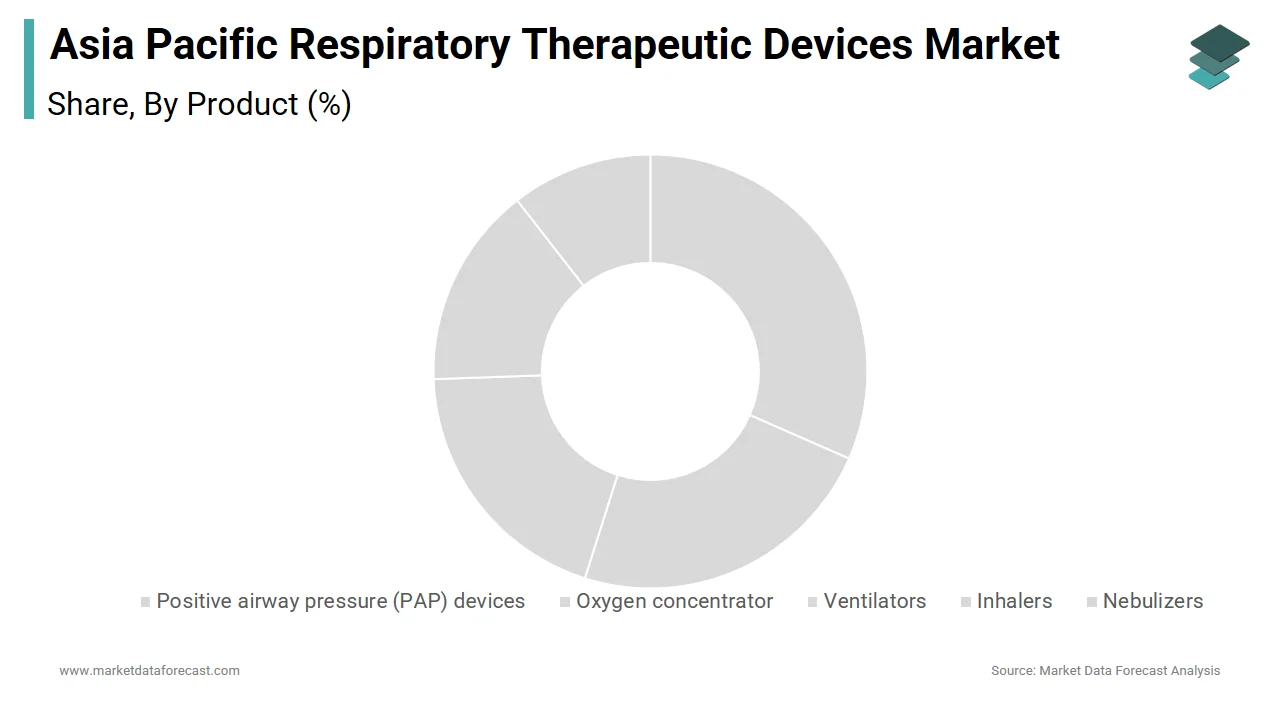
The oxygen concentrators segment dominated the Asia Pacific respiratory therapeutic devices market by capturing 28.51% of total market share in 2024. Chronic obstructive pulmonary disease (COPD) remains one of the leading causes of death globally with India and China alone contributing to over 3 million deaths annually due to air pollution and tobacco use. Additionally, the surge in respiratory illnesses post-pandemic has significantly increased home-based oxygen therapy usage. Another major contributor to the growth of this segment is the increasing geriatric population especially in countries like Japan and South Korea where the percentage of individuals aged 65 and above exceeds 28.18%. Technological advancements such as portable and low-energy oxygen concentrators suited for rural and remote areas further drive adoption. For instance, companies like Inogen and Phillips have launched compact models specifically tailored for APAC markets. The oxygen concentrator market in the Asia Pacific is projected to grow at a steady pace backed by strong healthcare investments and growing awareness about respiratory health.
The ventilator segment is projected to witness a fastest CAGR of 11.7% from 2025 to 2033. The growth of the segment is quietly driven by the infrastructure development and post-pandemic preparedness. The impact of the COVID-19 pandemic on hospital infrastructure cannot be overstated. Countries across the APAC region, particularly India, China and Indonesia, significantly expanded their ICU capacities. ICU beds in India grew by over 45.73% between 2020 and 2023 thereby directly boosting ventilator demand. Similarly, China’s government committed USD 7 billion to expand public hospitals and upgrade intensive care units during its 14th Five-Year Plan which indirectly fuels ventilator procurement. Simultaneously, there has been a surge in homecare ventilation systems especially in urbanized economies like Japan and Australia. The rise in neuromuscular disorders and chronic respiratory failure has increased prescriptions for non-invasive ventilation at home. The home-use ventilator sub-segment is expected to grow at a CAGR of over 14.84% in the APAC region through 2030.Medtronic signed joint ventures in Vietnam and Thailand to produce ventilators locally thereby reducing import dependency and cost barriers.
By Application Insights
The Chronic Obstructive Pulmonary Disease (COPD) segment was the largest and held 35.9% of the Asia Pacific respiratory therapeutic devices market share in 2024 with the high and increasing prevalence of COPD across several countries in the region especially in densely populated nations like China and India. An estimated 100 million people in China suffer from COPD thereby making it the second-leading cause of death in the country. In India, the situation is equally alarming with nearly 55 million adults affected by COPD. Air pollution, smoking and occupational exposure to dust and chemicals are key contributors to this burden. In addition to disease prevalence, the aging population in developed APAC countries like Japan and South Korea further fuels demand for COPD treatment devices. The elderly are more susceptible to progressive lung deterioration thereby necessitating long-term therapeutic interventions such as inhalers, oxygen concentrators and PAP devices. The Japanese government launched “Breath for Life” a national campaign promoting spirometry screening in primary care centers. Such initiatives enhance diagnosis rates and subsequent device uptake.
The Obstructive Sleep Apnea (OSA) segment is predicted to witness a fastest CAGR of 12.2% from 2025 to 2033. This robust growth is being fueled by heightened awareness of sleep disorders, increasing obesity rates and expanding access to diagnostic and therapeutic technologies.Sleep apnea has traditionally been underdiagnosed in many APAC countries.However, recent campaigns and medical education programs have improved recognition. In Australia, over 2 million Australians suffer from OSA with less than 20.95% diagnosed prior to 2010. Obesity is another key driver. The number of obese adults in the APAC region is expected to reach 200 million by 2030. Further, telemedicine platforms and home sleep testing kits have made OSA diagnosis more accessible especially in rural areas of India, Indonesia and the Philippines. Companies like ResMed and BMC Medical have launched affordable CPAP devices tailored for APAC consumers.
COUNTRY LEVEL ANALYSIS
China outperformed other regions in the Asia Pacific respiratory therapeutic devices market and accounted for 32.1% of the regional market share in 2024. The country’s growth is driven by its vast patient pool suffering from chronic respiratory diseases, dynamic healthcare infrastructure development and proactive government policies aimed at strengthening domestic medical device production. Air pollution remains a major public health concern in China. Environmental burden has led to a sharp increase in COPD, asthma and other chronic respiratory conditions. Additionally, the Chinese government’s push for self-reliance in medical technology under the “Made in China 2025” initiative has spurred local manufacturing of respiratory devices. Domestic players like Yuwell and Mindray have emerged as global competitors thereby offering cost-effective alternatives to imported products. The expansion of private healthcare networks and insurance coverage has also improved access to respiratory care. Over 95.71% of China’s population now has basic health insurance coverage thereby enabling broader utilization of therapeutic devices.
Japan was positioned second in holding the dominant share of the Asia Pacific respiratory therapeutic devices market in 2023. The country maintains a mature healthcare system characterized by advanced medical infrastructure, high per capita income and a rapidly aging population. In Japan more than 28.07% of the population is aged 65 or older thereby making Japan the world’s most aged society. Japan’s regulatory framework is also conducive to innovation and adoption of new technologies. The Pharmaceuticals and Medical Devices Agency (PMDA) ensures timely approvals for high-quality respiratory devices, encouraging both domestic and international companies to enter the market. Companies like Fukuda Denshi and Omron Healthcare play pivotal roles in shaping the local device ecosystem. Moreover, home healthcare is gaining popularity in Japan due to hospital bed shortages and cultural preferences for aging at home.
India’s respiratory therapeutic devices market growth is likely to have fastest growth opportunities in the next coming years. India’s market growth is being propelled by rising incidence of respiratory diseases, increasing urbanization and government-led healthcare reforms. India suffers from severe air quality issues with multiple cities consistently ranking among the world’s most polluted. Delhi recorded an average PM2.5 level of 96.4 µg/m³ in 2022 nearly ten times the WHO recommended limit. This poor air quality has led to a significant spike in respiratory illnesses. The Indian government’s Ayushman Bharat scheme covering over 500 million citizens has greatly improved access to critical respiratory care services. Startups and small enterprises are innovating in the space of affordable home oxygen devices and nebulizers supported by Make in India and Digital India initiatives.
Australia’s respiratory therapeutic devices market growth is driven by its well-developed healthcare system, high patient awareness levels and widespread adoption of technologically advanced devices. Australia has one of the highest prevalence rates of asthma globally with Asthma Australia reporting that nearly 2.7 million people live with the condition. The country also boasts a robust reimbursement framework. Under Medicare, continuous positive airway pressure (CPAP) devices are partially subsidized for diagnosed sleep apnea patients significantly lowering out-of-pocket expenses. Australia leads in digital integration with telehealth and connected respiratory devices. Internationally renowned brands like ResMed and Fisher & Paykel Healthcare have strong footholds in the Australian market and are expanding into other APAC regions from here.
South Korea’s respiratory therapeutic devices market growth is driven by its technological prowess. South Korea offers a unique blend of advanced healthcare infrastructure, high R&D investment and government-backed health initiatives. Diseases like COPD and sleep apnea are increasingly common thereby prompting greater adoption of devices such as ventilators and humidifiers. The Korean government plays a crucial role in fostering innovation through agencies like the Korea Health Industry Development Institute (KHIDI) funding research into next-generation respiratory devices. South Korea’s Ministry of Food and Drug Safety (MFDS) has also streamlined approval processes which encourage faster commercialization of novel products. Integrations between wearable sensors, mobile apps and cloud-connected devices allow real-time monitoring of respiratory parameters. Samsung and LG are investing heavily in IoT-enabled health products thereby creating synergies between consumer electronics and medical devices.
KEY MARKET PLAYERS
Some of the noteworthy companies in the APAC respiratory therapeutic devices market profiled in this report are Hill-Rom Services Inc. (Baxter), ResMed Inc., Drägerwerk AG & Co. KGaA, Hamilton Medical, Koninklijke Philips N.V., VYAIRE MEDICAL, INC., Invacare Corporation, Shenzhen Mindray Bio-Medical Electronics Co., Ltd., Breas Medical AB, ICU Medical, Medtronic, Fisher & Paykel Healthcare Limited, and GE Healthcare.
TOP LEADING PLAYERS IN THE MARKET
Philips (Netherlands-based)
Philips is a global leader in healthcare technology and plays a significant role in shaping the respiratory therapeutic devices market. In the Asia Pacific region, Philips has a strong presence through its wide range of products including CPAP machines, oxygen concentrators and ventilators. The company focuses on innovation and digital health integration thereby offering connected solutions that enhance patient monitoring and therapy outcomes. It collaborates with local healthcare providers and governments to improve access to respiratory care across both urban and rural areas.
ResMed (United States-based)
ResMed is a dominant player in sleep and respiratory care particularly known for its CPAP and non-invasive ventilation devices. ResMed has strategically expanded its footprint through localized product development, strategic partnerships and distribution networks. The company emphasizes home-based therapy solutions while aiming to support the rising demand for portable and user-friendly respiratory devices. Its focus on telehealth and remote patient monitoring aligns well with evolving healthcare trends in the region.
Fisher & Paykel Healthcare (New Zealand-based)
Fisher & Paykel Healthcare is a key contributor to respiratory care in the Asia Pacific region especially recognized for its humidification and respiratory support systems. The company provides innovative solutions for both hospital and homecare settings thereby focusing on improving patient comfort and treatment adherence.It caters to diverse clinical needs across countries with varying healthcare infrastructures with a strong R&D base and tailored product offerings. Its commitment to sustainability and clinical education further strengthens its regional influence.
TOP STRATEGIES USED BY KEY MARKET PARTICIPANTS
One major strategy employed by leading players is product innovation and technological advancement. Companies are investing heavily in developing next-generation respiratory devices that offer better usability, connectivity and patient compliance. These innovations often include smart features such as real-time monitoring, data analytics and compatibility with mobile applications.
Another crucial approach is strategic partnerships and collaborations. Firms are engaging in joint ventures, distributor agreements and academic alliances to expand their reach and integrate complementary technologies. These partnerships also facilitate deeper penetration into emerging markets within the Asia Pacific.
Companies are focusing on localized manufacturing and supply chain optimization. This localization strategy supports faster deployment and improved accessibility across diverse healthcare systems.
COMPETITION OVERVIEW
The competitive landscape in the Asia Pacific respiratory therapeutic devices market is marked by a mix of global multinationals and rapidly growing domestic players. Established companies leverage their strong brand recognition, extensive distribution networks and continuous innovation to maintain dominance. However, local manufacturers are gaining traction by offering cost-effective alternatives tailored to regional healthcare needs. The market is highly fragmented especially in developing economies where affordability and accessibility play critical roles. Competition is not only centered around pricing but also extends to product differentiation, ease of use and integration with digital health platforms. Mergers, acquisitions and strategic collaborations are increasingly common as companies aim to strengthen their regional foothold. Additionally, there’s a growing emphasis on expanding into tier-2 and tier-3 cities where untapped potential exists due to rising disposable incomes and increasing awareness about respiratory health. Innovation remains a key differentiator with firms racing to develop smarter and more efficient devices that cater to both hospital and homecare environments.
RECENT MARKET DEVELOPMENTS
- In September 2023, Philips launched a new line of portable oxygen concentrators specifically designed for the Asian market thereby targeting homecare users in rural and semi-urban regions.
- In November 2023, ResMed partnered with a leading Australian telehealth provider to integrate its CPAP therapy devices with remote patient monitoring systems.
- In February 2024, Fisher & Paykel Healthcare announced the expansion of its manufacturing facility in Malaysia to boost local production capacity.
- In May 2024, Yuwell Medical, a key Chinese manufacturer entered into a strategic collaboration with a Japanese distributor to expand its presence in Japan.
- In July 2024, GE Healthcare divested part of its respiratory care portfolio to acquire a niche digital diagnostics firm.
MARKET SEGMENTATION
This Asia Pacific respiratory therapeutic devices market research report is segmented and sub-segmented into the following categories.
By Product
- Positive airway pressure (PAP) devices
- Continuous positive airway pressure (CPAP) devices
- Auto-titrating positive airway pressure (APAP) devices
- Bi-level positive airway pressure (BiPAP) devices
- Oxygen concentrator
- Fixed oxygen concentrators
- Portable oxygen concentrators
- Ventilators
- Adult ventilators
- Neonatal ventilators
- Inhalers
- Metered dose inhaler (MDI)
- Dry powder inhaler (DPI)
- Soft mist inhaler (SMI)
- Nebulizers
- Compressor-based nebulizers
- Piston-based hand-held nebulizers
- Ultrasonic nebulizers
- Humidifiers
- Heated humidifiers
- Passover humidifiers
- Integrated humidifiers
- Built-in humidifiers
- Standalone humidifiers
- Others
By Application
- COPD
- Obstructive sleep apnea
- Asthma
- Respiratory distress syndrome
- Cystic fibrosis
- Others
By End-use
- Hospital
- Homecare settings
- Emergency centers
By Country
- India
- China
- Japan
- South Korea
- Australia
- New Zealand
- Thailand
- Malaysia
- Vietnam
- Philippines
- Indonesia
- Singapore
- Rest Of APAC
link